
 Featured
Anti-Aging
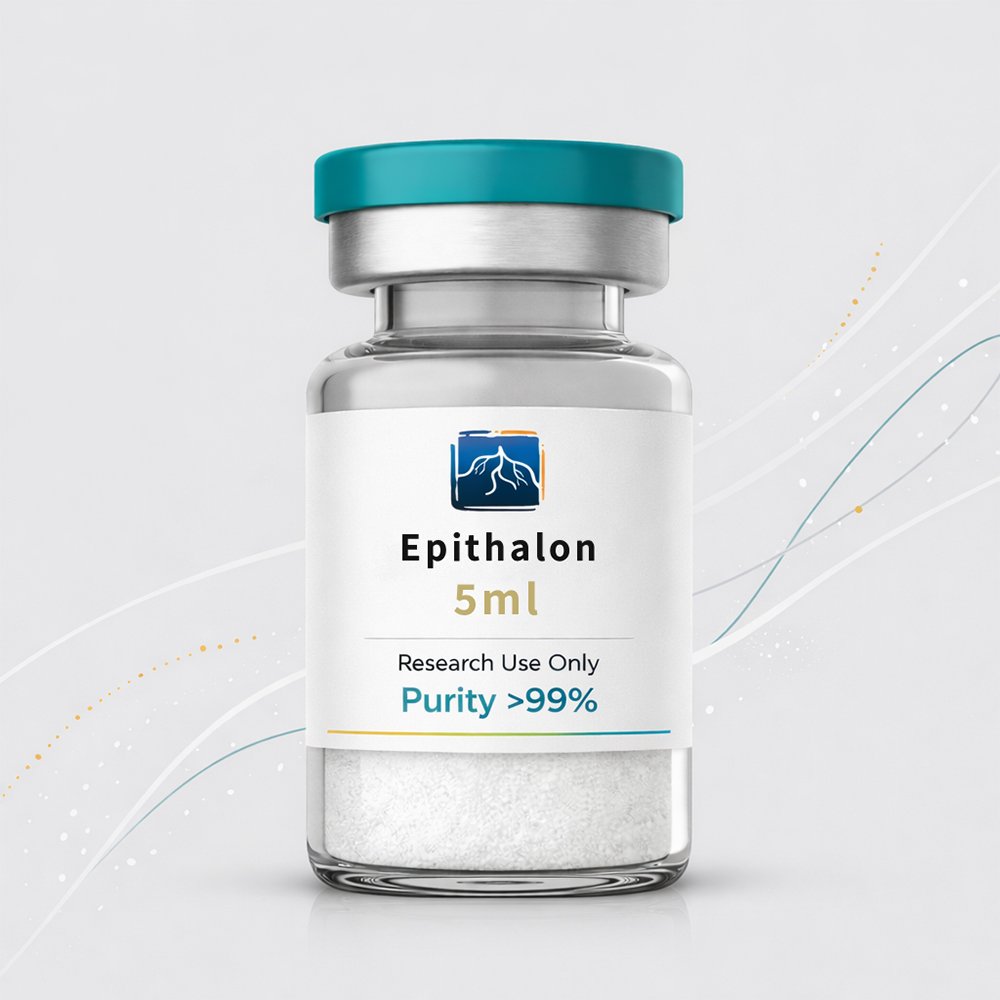
Epithalon (Epitalon)
CAS #: 307297-39-8
Epithalon is a synthetic tetrapeptide (Ala-Glu-Asp-Gly) derived from pineal peptide epithalamin. It reactivates telomerase to lengthen telomeres and promote cellular longevity, regulates circadian rhythms by stimulating endogenous melatonin production, and provides DNA protection through antioxidant effects. A comprehensive anti-aging compound targeting aging at cellular and systemic levels. Available as lyophilized powder with ≥99% purity.
CAS Number
307297-39-8
Molecular Formula
C14H22N4O9
Molecular Weight
406.34 g/mol
Sequence/Composition
Ala-Glu-Asp-Gly
Available SKUs
| Model | Specification | MOQ |
|---|---|---|
| epithalon-5 | 5ml | 1 vial |
| epithalon-10 | 10ml | 1 vial |
| epithalon-20 | 20ml | 1 vial |
Ships within 3-5 business days
Certificate of Analysis included
Quality guaranteed
| CAS Number | 307297-39-8 |
|---|---|
| Molecular Formula | C14H22N4O9 |
| Molecular Weight | 406.34 g/mol |
| Sequence/Composition | Ala-Glu-Asp-Gly |
| Amino Acids | 4 |
| Form | Lyophilized powder |
| Purity | ≥99% by HPLC |
| Storage | -20°C desiccated |
Need OEM or a Custom Configuration?
We offer custom synthesis, modifications, and OEM services. Share your requirements including sequence, purity, quantity, and any special needs—our team will provide a detailed quote.